

Free written scope consultation - allowances, timeline, and change-order rules on paper before a single trade is scheduled
Cambridge Pavers Kitchen Remodeling: The San Antonio Owner’s Guide
If you’re planning a Cambridge Pavers kitchen remodeling project in San Antonio, a full remodel typically runs $14,000 – $45,000 installed, depending on the size of the kitchen, the pavers you’re matching or replacing, and the appliances you’re integrating. We stock Cambridge Pavers-compatible materials for kitchen work and can walk you through paver options for kitchen floors, outdoor kitchen transitions, and the supporting subfloor work that makes paver installations last. Most San Antonio homeowners reach out to us after discovering their existing paver kitchen floor has shifted, cracked, or separated at the seams from years of Texas clay soil movement and temperature swings.
What we see most often: a paver floor or outdoor kitchen pavers that looked perfect for the first few years, then started to settle unevenly as the San Antonio soil expanded and contracted through wet springs and dry summers. The grout or sand joints fail first, then individual pavers start to rock underfoot or crack along the edges. By the time a homeowner calls us, the fix usually involves more than replacing a few pavers. It means addressing the base underneath so the same failure doesn’t happen again in eighteen months.
Which Cambridge Pavers Models This Applies To
Cambridge Pavers manufactures paver lines in several series classifications, and the compatibility question matters more than most homeowners realize. The main series lines include the Maytrx, Ledgestone, RoundTable, and Pavingstone collections, each with distinct dimensional tolerances and joint-width expectations. A RoundTable paver is not interchangeable with a Maytrx paver of the same color name. The molds are different, the edge profiles are different, and a mismatched paver will show at the joint line immediately.
When we assess a San Antonio kitchen that uses Cambridge Pavers, we check three things before quoting: the series name stamped or printed on the paver, the actual measured dimensions including thickness (most Cambridge Pavers run 60mm or 80mm thick for kitchen floor applications, and that thickness determines whether the floor can handle appliance weight without additional subfloor work), and the color lot code if you need matching pavers. Cambridge Pavers color lots vary slightly between production runs. If you have leftover pavers from the original install, write down the lot code before you lose the packaging. That one detail saves weeks of back-and-forth when we source matching material.
One compatibility gotcha we flag early: Cambridge Pavers designed for outdoor patios are not always rated for interior kitchen floors with heavy appliances rolling across them. The paver itself is dense and durable, but the install method differs. Interior paver floors over a concrete slab need a specific thin-set and joint system, not the sand-set method used outdoors. If a previous contractor installed your kitchen pavers with an outdoor method indoors, that’s the root cause of most failures we see. We’re an independent San Antonio remodeling contractor, not affiliated with Cambridge Pavers, so our recommendations are based on what actually holds up in local kitchens rather than what a manufacturer’s generic installation guide says.
Styles & brands we work with







Signs Your Cambridge Pavers Kitchen Remodeling Is Failing
- Pavers rock or shift when you step on them. This usually means the setting bed underneath has eroded or was never compacted properly. In San Antonio’s clay-heavy soil, moisture changes cause the sub-base to move, and pavers follow it.
- Joint sand or grout keeps disappearing between pavers. Losing joint material is a sign of water moving under the pavers, washing the base out over time. It’s not a cosmetic issue. It’s the floor losing structural support.
- Cracks run through multiple pavers in a line. A single cracked paver can be a manufacturing defect or impact damage. A line of cracks across several pavers usually points to a slab crack or a failed expansion joint underneath, which is a bigger repair.
- Edges of the paver field are separating from walls or cabinets. Paver floors expand and contract slightly with temperature. If there’s no perimeter expansion gap, the floor pushes against the walls and pulls itself apart at the edges.
- You hear a hollow sound when tapping pavers with a broom handle. Hollow-sounding pavers have debonded from the setting bed beneath them. In a kitchen, that means the pavers are no longer carrying weight as a system, and appliance traffic will eventually crack them.
See the difference
 Before
 After
After Before
 After
After Before
 After
AfterReplacement Cost & What’s Included
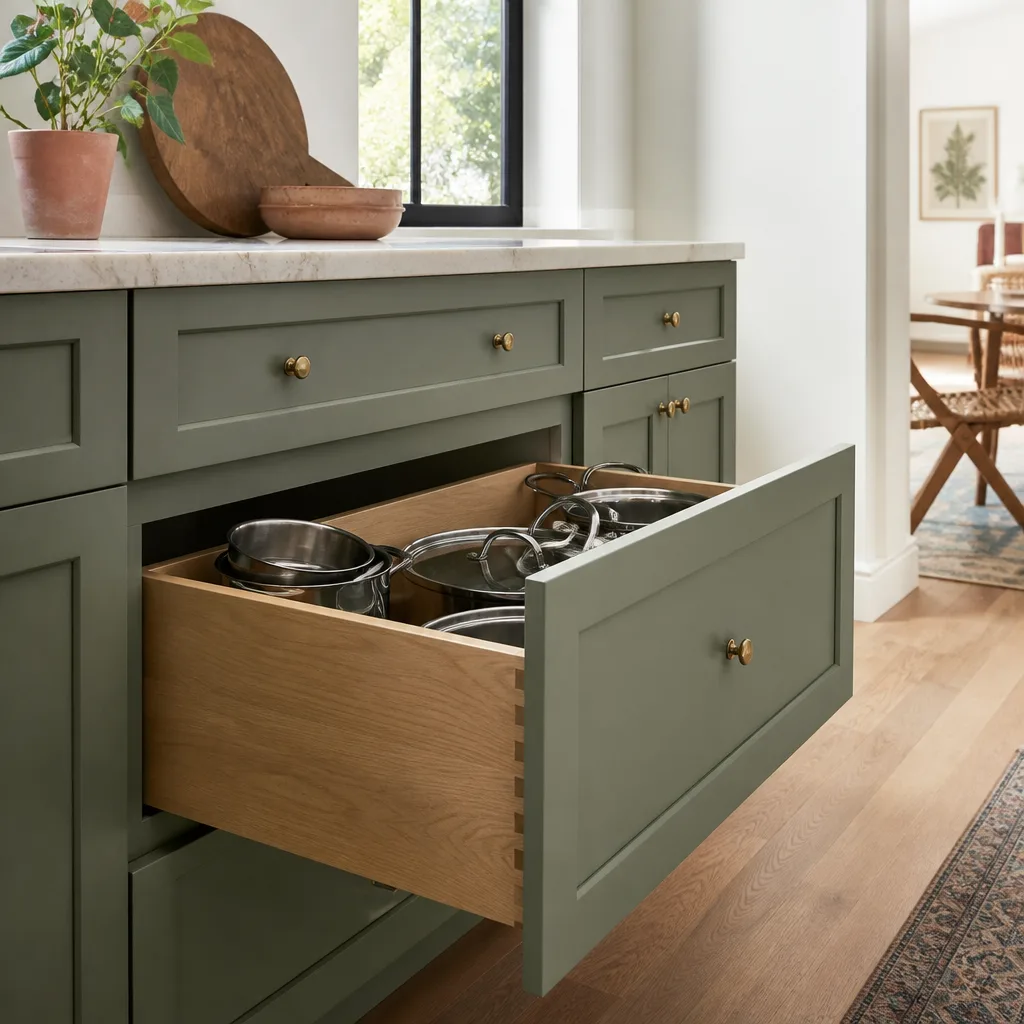
A full Cambridge Pavers kitchen remodeling in San Antonio runs $14,000 – $45,000. The spread is wide because the job scope varies enormously. A smaller kitchen with existing paver floors, modest cabinet work, and no structural changes lands at the lower end. A large kitchen with a paver floor replacement, kitchen island, new counters, new cabinet layouts, and plumbing or electrical changes climbs toward $45,000.
Every written price we hand you before work starts includes the materials, labor, removal and disposal of the old floor or cabinets, subfloor or base repair where needed, the paver installation system, joint material, and the clean-up. We don’t start the work and then discover a charge for shoe covers or drop cloths. Those are always included. Graham Stein, who owns Elmstead Remodeling San Antonio, writes every scope of work down before a single tool leaves the truck. The written price you sign is the price you pay, no line items added after demo day. If a behind-the-wall issue shows up mid-project, we stop, show you what we found, and give you a revised written price before proceeding. You approve it or you don’t, and nothing proceeds without that approval.
Our 365-Day Done Right Promise covers every completed project. If something’s not right after the job is done, we make it right. That promise is stamped on every project we do in San Antonio, and it’s the reason a lot of our kitchen remodeling work comes from families who had a bad experience with a previous contractor and don’t want to repeat it.
DIY or Call Us?
Replacing a single paver that has cracked but is still sitting solidly in the field is something a careful homeowner can handle if they have the matching paver and understand the joint system. Replacing a paver kitchen floor, fixing a shifting base, or addressing a line of cracks across multiple pavers is not a weekend project. The base work involves removing the pavers, assessing the slab or setting bed, compacting and leveling, and reinstalling with the correct system for interior use. Get the base wrong and the same failure returns within a year or two, only now you’ve paid for the materials twice.
There’s also the practical reality of living in the space. A kitchen without a floor or with cabinets removed is unusable for the duration of the work. Our crews plan kitchen remodeling around your family’s actual schedule. We use quiet tools during nap and school hours where possible, ask before we move anything, and we protect the rest of your house while we work. Drop cloths go down on every floor path, shoe covers go on at the door, and we send you a photo of the clean-up before the crew leaves each day. If you’d rather not live in a construction zone for weeks, call us at (432) 233-0976 and we’ll give you a written price and a realistic schedule. Write it down, price it once, do it right.
FAQs
A properly installed Cambridge Pavers kitchen floor should last 25 years or more, which is why the base and install method matter more than the paver itself. The paver is rated for decades of wear. What fails first in San Antonio is the setting bed underneath, as our clay soil expands and contracts through wet and dry seasons and shifts the support under the pavers. Call (432) 233-0976 if you’re seeing signs of movement, and we’ll assess the base, not just the surface.
Yes, if the pavers around them are still solid and the base is intact. We can source matching Cambridge Pavers by series and color lot and replace just the damaged pieces. If the damage runs across multiple pavers in a line or the floor has started shifting, spot repair won’t hold and we’ll tell you that plainly. Estimates are free, and you’ll get a written price either way.
Most full kitchen remodels take three to eight weeks depending on scope, permitting, and whether we’re replacing the paver floor and subfloor or working over the existing surface. A paver floor replacement on its own typically takes five to seven working days including base work, setting, and joint finishing. We’ll give you a written schedule before any work starts, and we hold to it as closely as San Antonio’s weather and permitting offices allow.
We keep common Cambridge Pavers compatible joint materials and setting products on our trucks, and we can order specific paver series and color lots through our local San Antonio suppliers, usually within a week. For kitchen remodeling, we also stock or source cabinets from KraftMaid, and countertops from Cambria and Silestone, so we can coordinate your paver work with the rest of the kitchen rather than sending you to three different suppliers. Call (432) 233-0976 and we’ll check availability for your specific Cambridge Pavers series while you’re on the phone.
Written by Graham Stein, Owner, Elmstead Remodeling San Antonio at Elmstead Remodeling San Antonio, serving San Antonio and nearby areas.


