
Free written scope consultation - allowances, timeline, and change-order rules on paper before a single trade is scheduled
ActiveYards Home Additions & ADU: The San Antonio Owner’s Guide
If you’re looking at an ActiveYards outdoor living structure and wondering whether it can be enclosed, expanded, or converted into usable square footage, the honest answer is that ActiveYards itself doesn’t manufacture home addition or ADU kits. What we see in San Antonio is this: homeowners have an ActiveYards pergola, pavilion, or screen room that’s structurally sound, and they want to know if it can become a finished room. Sometimes it can, with the right permitting and a framing plan that works around the existing aluminum structure. Most full home additions in San Antonio run $45,000 to $130,000, and ADU construction runs $90,000 to $220,000, though an ActiveYards-adjacent covered patio enclosure often lands at the lower end of that range because the roof and footings may already be in place.
The more common discovery, though, is that a homeowner planned around the ActiveYards unit they already own, and a part of that unit has failed: a corner bracket has pulled loose from the post, a louver is binding, or the screen track has warped in the Texas heat. That failure changes the math on the whole project, because you can’t frame against a structure that’s no longer true. If that’s where you are, we can talk through whether the ActiveYards part needs repair first, or whether the addition plan should bypass it entirely. Call (432) 233-0976 and we’ll walk the site with you.
Which ActiveYards Models This Applies To
ActiveYards product lines we encounter regularly in San Antonio include the freestanding and attached pergolas, the pavilion series, and the screen room systems with extruded aluminum framing. The key compatibility question when you’re planning a home addition or ADU isn’t the model name on the box; it’s the connection hardware and the post setup. Most ActiveYards posts are powder-coated aluminum in 4-inch, 5-inch, or 6-inch profiles, and the fasteners are self-tapping screws into pre-drilled channels. That matters because a framing plan for enclosing the structure has to account for aluminum’s expansion rate in Texas heat, which is roughly twice that of wood framing. In San Antonio, a 20-foot aluminum header can grow by close to a quarter inch between a January morning and an August afternoon, so any new wall that ties into it needs a slip connection, not a rigid one.
Identifying your model is a matter of looking at the post caps, the corner brackets, and any label embossed into the rail channels. If the label is gone, measure the post width and the rail depth. The pavilion line tends to use a heavier gauge than the pergola line, and that changes what you can hang from it if you’re adding a ceiling or a fan housing. On the OEM-versus-aftermarket question: for brackets, post caps, and screen spline, we’ll match OEM where it’s available. For louvers, mesh panels, and hardware sets, quality aftermarket equivalents from the same extrusion suppliers are usually fine and cut weeks off the wait. What we won’t do is substitute a lighter-gauge bracket just because it fits the channel, because that’s the part that fails first in a San Antonio wind event.
Elmstead Remodeling San Antonio is an independent contractor and not affiliated with ActiveYards. We work with the structure you have or help you plan one from scratch if the existing unit doesn’t make sense to keep.
Styles & brands we work with







Signs Your ActiveYards Home Additions & ADU Is Failing
- Corner brackets pulling away from the post: This usually means the self-tapping screws have stripped their holes after repeated thermal cycling. The aluminum expands and contracts, the screw threads work loose, and the bracket starts to gap. Left alone, the post will rack and the whole structure will shift out of square.
- Louvers or screen panels binding mid-track: Aluminum tracks in direct San Antonio sun get hot enough to distort slightly, especially on south-facing elevations. A louver that slides fine in the morning and binds by 2 p.m. is a thermal issue, not a cleaning issue. It’s a sign the track channel has deformed and needs replacement, not lubrication.
- Post base plates rusting or cracking at the anchor: The posts themselves won’t rust, but the galvanized or stainless base plates can if the original install didn’t isolate them from the concrete. We see this most often near pools and irrigation overspray. A cracked base plate is a structural problem, not a cosmetic one.
- Roof panels sagging between purlins: ActiveYards roof systems use fixed purlin spacing. If you’re seeing sag, the purlin clips have either failed or the panel was never the right gauge for the spacing. This matters double if you’re planning to enclose the space, because the new ceiling load sits on exactly what’s sagging now.
- Visible stress at the header-to-post connection after a storm: San Antonio gets straight-line winds and the occasional hail-loaded front. If a header shows a new gap or the gutters are suddenly misaligned after a blow, the connection hardware yielded. It needs inspection before any addition work ties into it.
See the difference
 Before
 After
After Before
 After
After Before
 After
AfterReplacement Cost & What’s Included
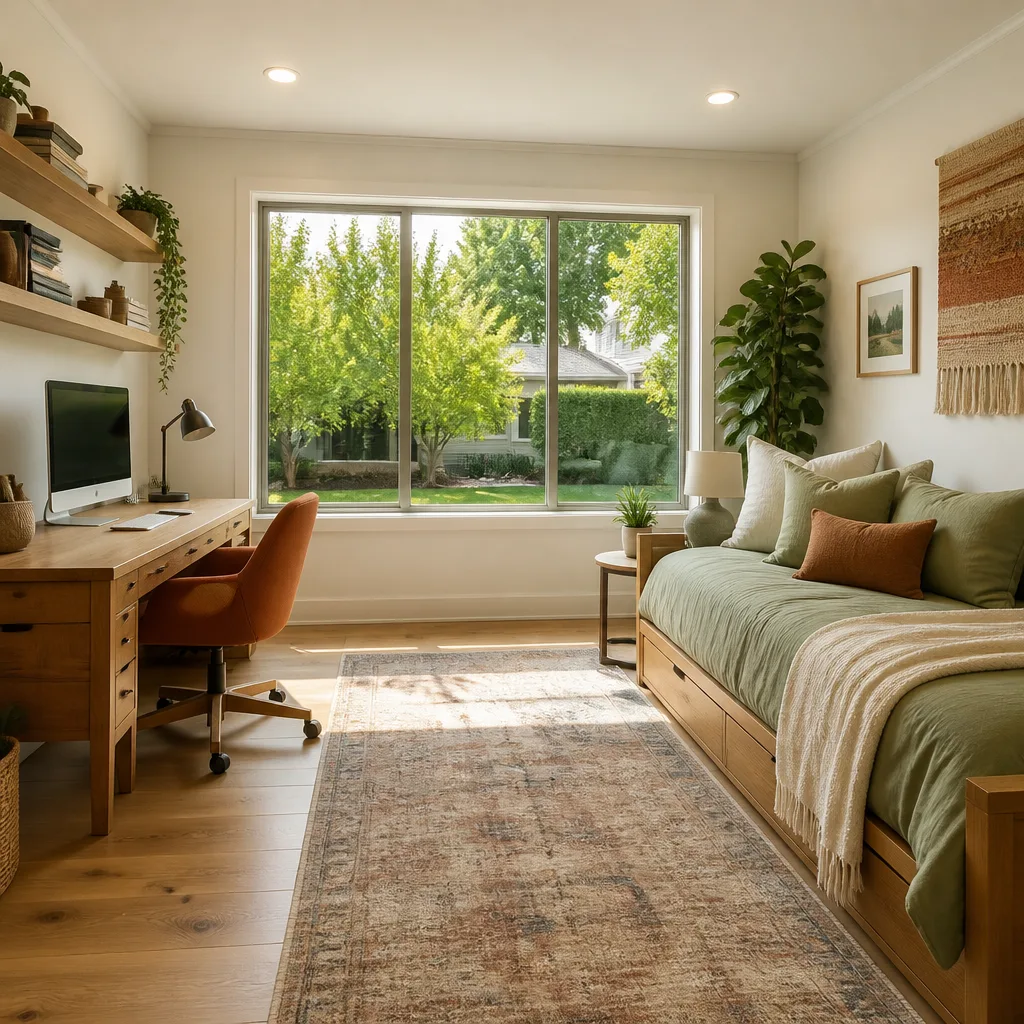
For a standalone home addition in San Antonio, you’re looking at roughly $45,000 to $130,000. An ADU with its own kitchen and bath runs $90,000 to $220,000. A garage conversion, which is the route many homeowners take when they already have the footprint, runs $30,000 to $80,000. Where an ActiveYards structure fits into this: if the existing unit is sound and properly permitted, enclosing it can pull your cost toward the bottom of the addition range because foundation and roof portions already exist. If the ActiveYards structure needs significant repair first, budget $2,000 to $8,000 for bracket replacement, track work, and re-squaring before any framing plan gets drawn.
Every one of our quotes includes a written, line-item price before any work starts. That means the lumber, the fasteners, the window and door units, the labor hours, the permit fees, and the dumpster are all named on paper. No allowances that “might go up.” Graham Stein writes the scope himself, and the price you sign is the price you pay. The work carries the 365-Day Done Right Promise: if something’s not right after we leave, we come back and make it right. No exclusions on trim, caulking, door alignment, or paint touch-ups.
DIY or Call Us?
What you can do yourself: take photos of every bracket and connection, measure the post widths, check for play by hand at the header-to-post joints, and pull any permit records you have from the original install. That record matters, because an ActiveYards structure that was never permitted as an attached structure can derail an addition permit later. San Antonio’s Development Services Department will want to see what’s existing before they approve what’s new.
What you shouldn’t do yourself: remove or loosen structural brackets on an aluminum frame under load. The tension in a racked header can release suddenly, and the post can shift. If the structure is attached to the house, a failed connection can also pull on the fascia. We handle the disassembly with temporary bracing in place, and we photograph every connection before and after. If you’re in the “I’m not sure if mine is sound” stage, call (432) 233-0976 and we’ll come look. The estimate is free, and we’ll tell you plainly if the structure is worth building onto or if you’d be better off starting fresh.
FAQs
With correct installation and intact hardware, the aluminum frame itself can last 20 to 30 years in San Antonio’s climate. What fails first is the hardware: the self-tapping screws, the base plate anchors, and the purlin clips. Those typically need attention at the 8- to 12-year mark, sooner if the structure faces south with no shade or sits within splash distance of a pool. Call (432) 233-0976 and we’ll inspect yours and tell you what’s actually left in it.
In most cases, yes. Brackets, track channels, louvers, and roof panels are replaceable without tearing out the whole unit. Repair makes the most sense when the posts are still true and the concrete anchors are solid. If the posts themselves are racked or the anchors are compromised, replacement starts to cost less. We’ll give you the repair number and the replace number on the same sheet and let you decide.
A bracket and track repair is usually a one-day job. Re-squaring a racked structure and replacing multiple connections takes two to three days. A full enclosure or garage conversion runs eight to fourteen weeks depending on permitting and inspections. You’ll get a schedule in writing before we start, and we’ll tell you which days we need access and which days we don’t.
We keep the common items on the truck: corner brackets, post caps, self-tapping fasteners, screen spline, and track channel in the standard sizes. Oddball items like custom louver lengths or pavilion-specific purlin clips we order directly, which usually takes a week to ten days. If you need something unusual, call (432) 233-0976 and we’ll check our inventory while you’re on the phone, not send you to voicemail.
Written by Graham Stein, Owner, Elmstead Remodeling San Antonio at Elmstead Remodeling San Antonio, serving San Antonio and nearby areas.


